

The terroir of Benastra —
between mountains, schists and the Mediterranean
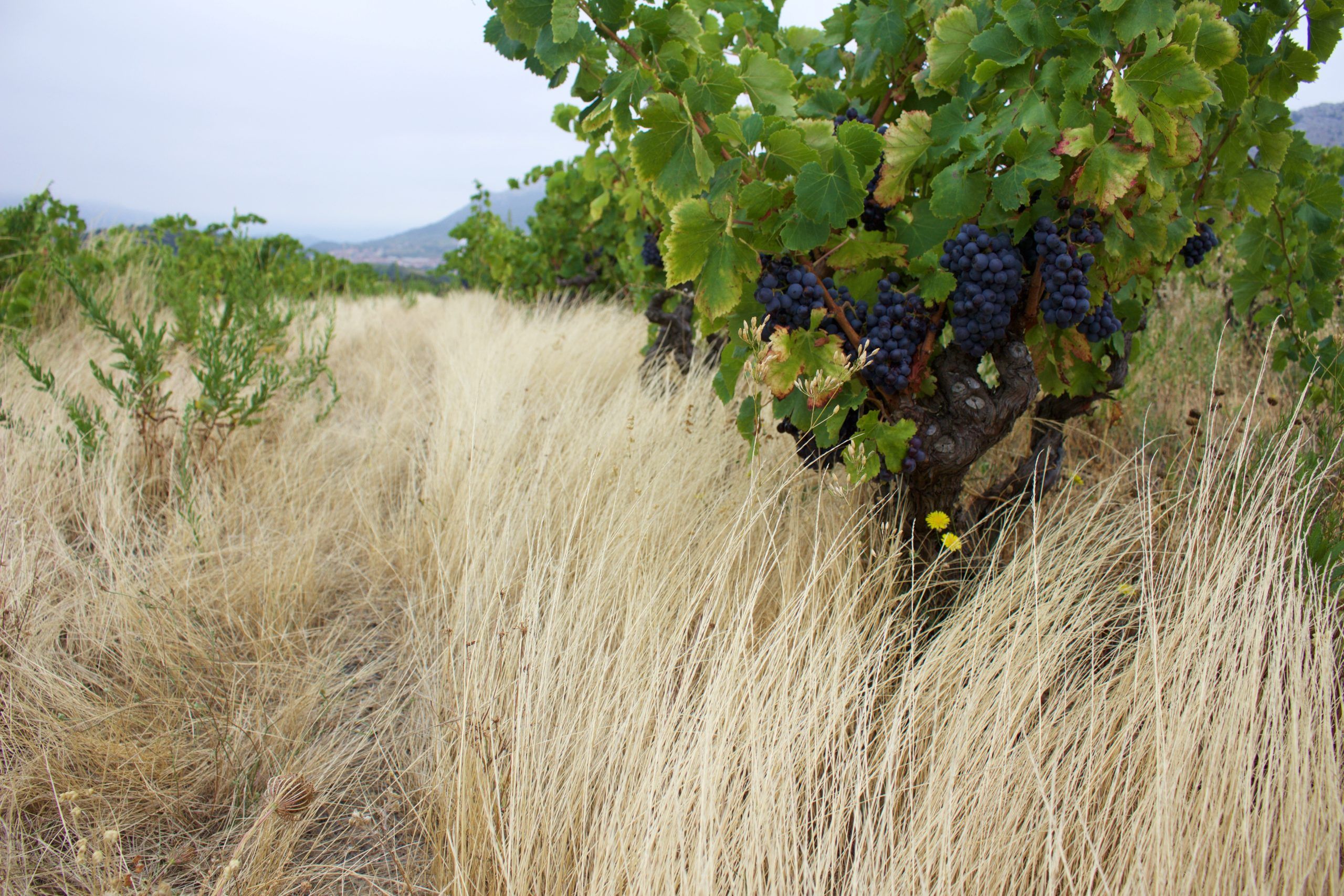
From Saint-Paul-de-Fenouillet to the village of Trilla, between 200 and 550 meters above sea level, the Benastra vines grow on black schist 470 million years old. This exceptional terroir of Fenouillèdes – beaten by the Tramontane, shaped by centuries of Catalan viticulture – explains the unique personality of each vintage.
Vines in production
Altitude meters
Years — age of vines
Ecocert certified
From 200 to more than 550 meters above sea level
In Mediterranean vineyards, heat is a wealth and a risk at the same time. It guarantees the maturity of the grapes — but taken too far, it produces alcoholic wines that lack tension and freshness. Altitude is the natural tool that corrects this excess.
The low vineyards of Benastra, around Saint-Paul-de-Fenouillet, are about 200 meters away. The highest, in the village of Trilla in the Fenouillèdes massif, exceed 550 meters. It is precisely there that the old Carignan vines grow — some planted more than 100 years ago — where the natural conditions further enhance the concentration and complexity of the berries.
Roussillon receives more than 2,500 hours of sunshine per year. But if the days remain warm and sunny, the nights at this altitude are noticeably cooler than in the plains. The thermal amplitude between day and night can reach up to 20°C in the Agly valley. This daily deviation produces a specific effect:
- The ripening is slowed down: the acids degrade less quickly at night, the natural freshness of the grapes is preserved better.
- The vine has more time to develop its aromas before being harvested.
- The alcohol/acidity balance is better preserved — less risk of heavy or unbalanced wines.
- For Gneiss whites — Macabeu, Grenache Blanc, Grenache Gris — this altitude is decisive: these naturally generous grape varieties express here a tension and finesse rarely found in plain Roussillon whites.
Soils of great diversity
Benastra does not have a homogeneous terroir. Its 12 hectares of vines extend over several types of soil with very different characteristics. This diversity is a wealth: it explains why identical grape varieties, grown on neighboring plots, can express such contrasting personalities.
Black shales
The black shales of the Agly valley date from the Ordovician – around 470 million years ago. These are metamorphic rocks which fragment into thin and friable sheets. They drain water very quickly, forcing the vine to root deeply to find moisture. This controlled water stress naturally limits yields and concentrates the berries. Shale also absorbs heat from the sun during the day and slowly releases it at night — contributing to gradual, even maturation. It is on these soils that Grenache Noir and Carignan reach their full expression in Fenouillèdes.
Granite & gneiss
Gneiss is metamorphosed granite — a hard, coarse-grained, acidic rock. Present on certain plots in the foothills of Fenouillèdes, it offers perfect drainage and very poor soils. The vines there are forced to take root even deeper than on schist. These acidic and well-drained soils, combined with the altitude, contribute to a fresh and elegant expression of white wines – this is why the white cuvée is called Le Gneiss, in direct homage to the soil on which it grows.
Calcareous clays
Present sparsely on certain plots, calcareous clays behave differently from shale. They retain water and provide the vines with a more stable water reserve — an asset in very dry vintages. Slightly basic soils influence the mineral assimilation of the vine. On these plots, reds based on Grenache or Mourvèdre can express a more generous roundness and substance.
Organic viticulture serving the terroir
Benastra is certified Organic Agriculture by Ecocert. This certification commits the estate to a set of practices controlled each year — it is not a marketing argument, it is a way of working the land.
Concretely, this means:
- No synthetic pesticides or synthetic chemical fertilizers. The protection of vines is based on products of natural origin — copper against mildew, sulfur against powdery mildew — used in limited quantities.
- manual harvest: each bunch is harvested by hand, allowing precise selection of the berries.
- From fermentations to indigenous yeasts: the yeasts naturally present on the grapes and in the cellar drive the fermentations. These local yeasts contribute to the expression of the terroir in the wine.
- Soil work to promote microbial life and the structure of the earth. A living soil nourishes the vine in a balanced and sustainable way.
- Sulphites are used sparingly, to the minimum necessary to protect the wine.
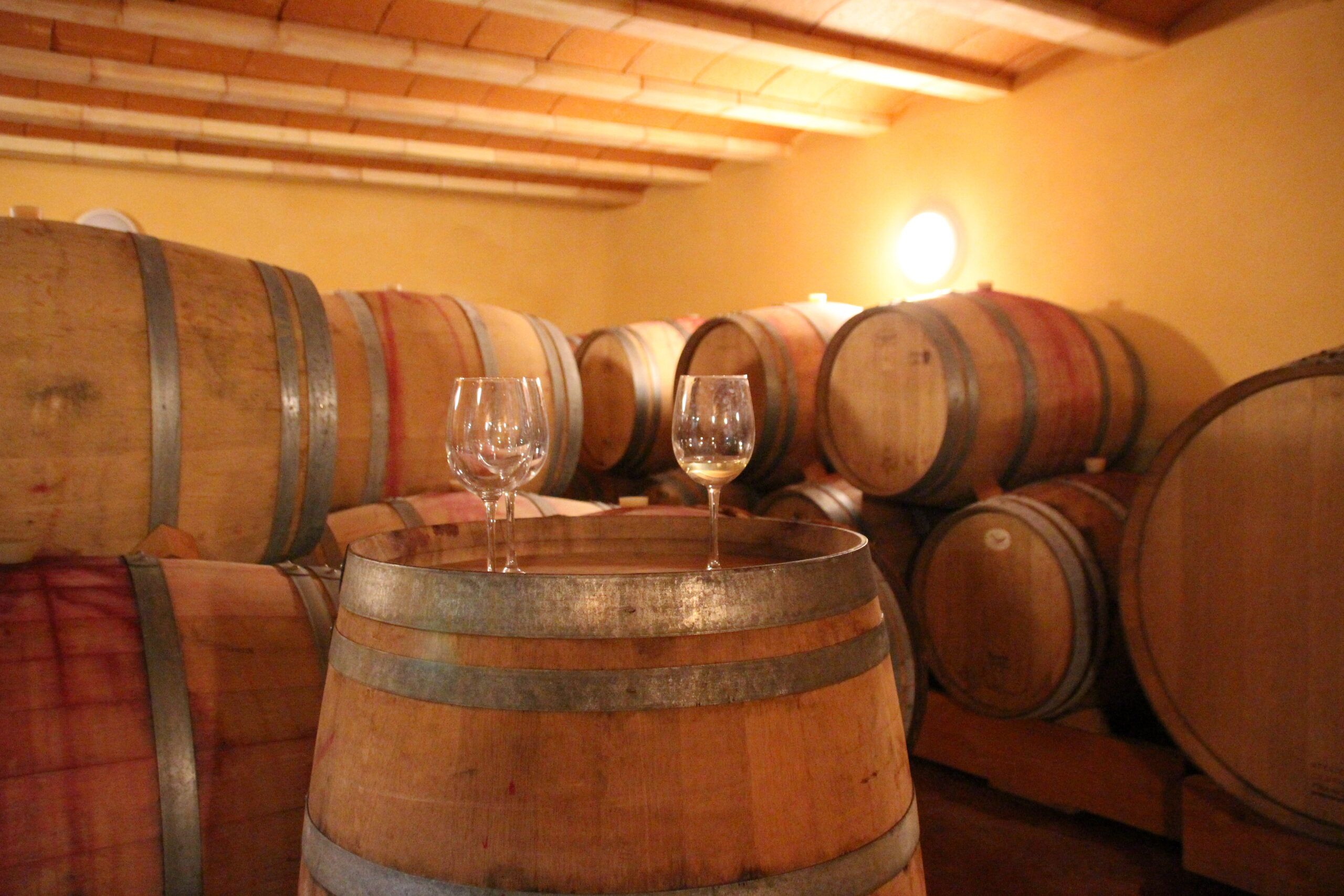
For aging, Maury Tuilé is aged in oak barrels — a decision by the winemaker to support the aging of this exceptional natural sweet wine.
When terroir meets grape varieties
Terroir alone does not make a wine. The personality of a bottle is born from the interaction between five elements: the grape variety, the soil, the altitude, the climate, and the work of the winemaker. Remove one of them, and the result changes fundamentally.
Benastra grows five red grape varieties and three white grape varieties. The youngest vines are 5 years old — mostly white.
Red grape varieties
Carignan Red
One of the oldest grape varieties in Roussillon, present since the 12th century. Long unloved for its industrial yields, it reveals a completely different nature on old vines. The century-old Benastra plants — planted more than 100 years ago in the village of Trilla — produce naturally very low yields. The berries are concentrated, dense. Late, Carignan ripens slowly, which allows it to retain a natural acidity rare in the South. On the black shale of Fenouillèdes: concentrated black fruits, licorice, tense structure. At Benastra, this is the only vintage made from a single grape variety — 100% Carignan.
Grenache Noir Red
Emblematic grape variety of Roussillon since the Middle Ages. Generous by nature, it easily accumulates sugars and produces wines rich in natural alcohol, with ample texture and soft tannins. At moderate altitude – as in Benastra – this generosity is tempered by the coolness of the nights. On black shales, it can reach a remarkable depth – this is why the AOP Maury requires it to be at least 75% in its composition. Present in Maury Tuilé and in the blends of La Petite Sœur and La Garrigue.
Syrah Red
Well acclimatized in Roussillon, Syrah brings a distinct aromatic signature: black fruits, pepper, spices, often a floral touch. Its tannic structure is finer than that of Mourvèdre and its acidity more marked than that of Grenache. At altitude and on schist, it expresses less southern power than finesse. At Benastra, she enters La Petite Sœur and La Garrigue. It is also the only variety used for Flamant Rose qui Pète — 100% Syrah sparkling rosé, without appellation.
Lledoner Pelut Red
Its Catalan name means “hairy Grenache” — its leaf is covered with a fine down which visually distinguishes it from Grenache Noir. A traditional grape variety from Roussillon, it is genetically close to Grenache but with important differences: it accumulates slightly less sugar, is less sensitive to oxidation, and more regular in production. It brings finesse, fruit and relative freshness where Grenache brings roundness and warmth. Present in La Petite Sœur, where it gives elegance to the assembly.
Mourvedre Red
The most tannic and most structured of the southern grape varieties. It needs heat to ripen properly — the long, dry summers of Fenouillèdes suit it. It provides structure, body and exceptional aging potential. Its young aromas evolve into spices, garrigue and black fruits; over time, they become more complex. At Benastra, it is used in the blend of La Garrigue with Grenache Noir, Syrah and Carignan.
White grape varieties
Macabeu White
A traditional grape variety from Catalonia and Roussillon, Macabeu is the backbone of Gneiss. It is the grape variety of roundness and substance in Gneiss. It brings body, generosity and aromas of white flowers – acacia flower, white peach. On granite/gneiss at altitude, this roundness is supported by a slight mineral tension which avoids heaviness.
Grenache Blanc White
The white counterpart of Grenache Noir — generous, rich, with a beautiful roundness on the palate. White fruits (peach, apricot), floral notes, sometimes a touch of hazelnut when ripe. At altitude, this generosity is contained — the wine remains fresh despite its richness. In the Gneiss, it balances the Macabeu by providing it with substance and fat.
Grenache Gris White-rosé
A mutation of Grenache Noir — its berries have a characteristic pinkish-gray color. It occupies an intermediate position in the blend: less rich than the White, more aromatic and complex. Slightly spicy notes, a perceived minerality which reinforces the tension of the wine, a beautiful persistence on the palate. It is this which gives Gneiss its singularity – that something unexpected that neither Macabeu nor Grenache Blanc bring alone.
Benastra grape varieties
| Grape variety | Type | What it brings | Fenouillèdes profile | Cuvées Benastra |
|---|---|---|---|---|
| Carignan | Red | Structure, depth, acidity, longevity | Old vines 100+ years old · on granite soils · extreme concentration · unexpected freshness | Carignan (single grape variety) · La Garrigue · La Petite Sœur |
| Grenache Noir | Red | Roundness, warmth, ripe fruit, natural alcohol | At altitude: more balance and freshness than in the plain · on shale: depth | Maury Tuilé · The Little Sister · La Garrigue |
| Syrah | Red | Spices, fruit, fine tannin structure | At altitude: fine and silky · less heavy than in the hot plain | The Little Sister · The Garrigue · Farting Pink Flamingo (100%) |
| Lledoner Pelut | Red | Finesse, fruit, relative freshness, regularity | Traditional Catalan grape variety · brings elegance to blends | The Little Sister |
| Mourvedre | Red | Firm tannins, body, ability to age | Ripens well in the heat of Fenouillèdes · provides structure to blends | La Garrigue |
| Macabeu | White | Roundness, material, white flowers | Brings body and generosity to Gneiss — white peach, acacia, supported by mineral tension | Gneiss |
| Grenache Blanc | White | Finesse, freshness, delicate white fruits | Balances the roundness of Macabeu — brings lightness and tension | Gneiss |
| Grey Grenache | White-pink | Finesse, freshness, aromatic complexity, spices | With Grenache Blanc, brings freshness — more aromatic and persistent than its cousin | Gneiss |
From terroir to bottle
The terroir of Benastra — its schists, its altitude, its Tramontane — is a base. But it’s Joseph Paillé who makes wines. Each vintage is the result of a precise reading of the vintage, a decision on the harvest date, a choice of blend between plots with different personalities.
White · Macabeu, Grenache B. & G.
Gneiss
Red Carignan single-varietal
Le Carignan
Red Mourvèdre, Grenache, Syrah, Carignan
La Garrigue
Red · Lledoner, Grenache, Syrah, Carignan
Little Sister
Sparkling Rosé · Syrah · Without appellation
The Farting Pink Flamingo
Natural sweet wine · AOP Maury · Barrel-aged
Le Maury Tuilé